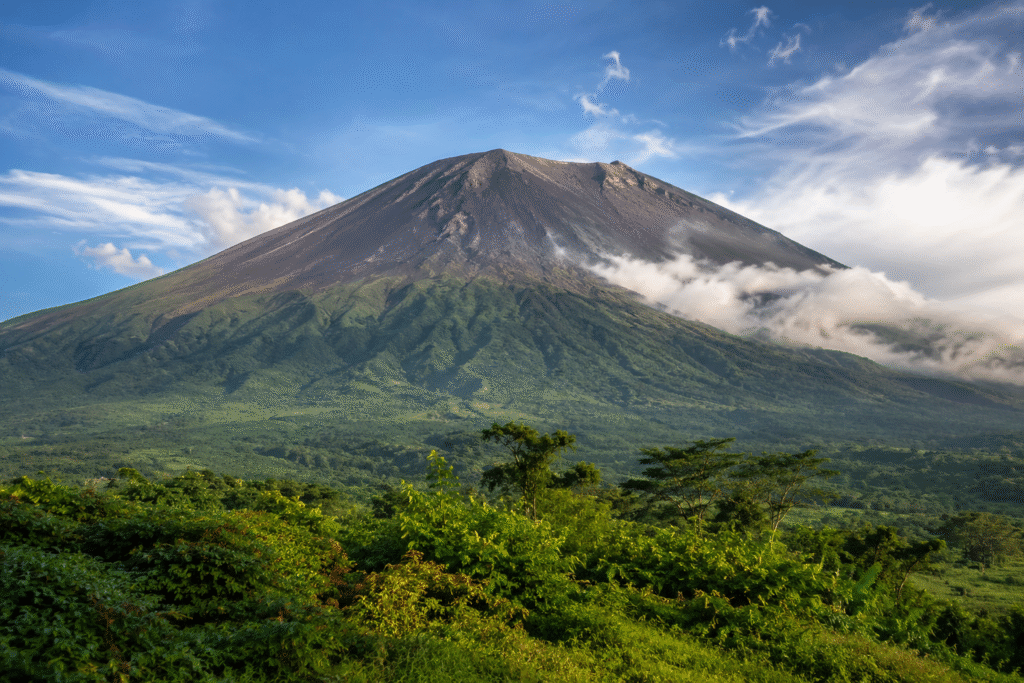
In the heart of hashtag#Buea, where the mist often hugs the slopes of the “Chariot of the Gods,” a peculiar phrase was whispered around February: “Christmas is here.”
To an outsider, it sounds like madness. How can the pines of December survive the scorching dry season of February? But to us who grew up in the shadow of Mount Cameroon, this is no calendar error. It is a memory of a time when a race was more than just a sprint-it was a season of the soul.
Decades ago, when the Guinness Mount Cameroon Race reigned supreme, February didn’t just bring heat; it brought electricity. In the 70s, 80s and early 90s, the race was the undisputed center of the Cameroonian universe.
Back then, the arrival of the race meant total “joie de vivre”. For kids in Buea, Limbe, and Tiko, it was the “Second Christmas.” We didn’t wait for Santa; we waited for the legendary Timothy Lekunze or his British rival Mike Short to emerge from the mountain fog.
The rituals were sacred. Parents bought “Christmas clothes” for their children. The air smelled of woodsmoke, rice, and the fizzy pop of Guinness-sponsored sodas. It was a communal feast where uncles, aunties, cousins and friends gathered along the road to cheer as athletes tackled the 4,100m giant. The race belonged to the people, and the mountain felt like a protective father.
Fast forward to 2026, over 600 athletes will be lining up tomorrow February 21st for the 31st edition of the Mount Cameroon Race of Hope. On paper, the race is bigger. The prizes have swelled to millions of FCFA. The government has taken the wheel, steering the event with high-level committees and capital-city budgets.
Yet, for many Buea denizens, the “luster” has been replaced by a lingering fog. Somewhere along the transition from a corporate “jamboree” to a state-managed “Race of Hope,” the local flavor began to evaporate. Today, the race is often conceived in the air-conditioned offices of Yaoundé and merely “staged” in Buea. It has become a professional athletic fixture-sanitized, organized, but perhaps a bit distant from the village hearths and family tables where it once lived.
Even the ancient legends seem to have retreated. Efasa Moto, the god of the mountain, is rarely mentioned. People run up and down his home, but do we still hear his heartbeat? The answer is NO.
The 2026 edition is proof that the spirit of the mountain is indestructible. The challenge for the future isn’t just about increasing the prize money or the number of qualifiers. To bring “Christmas in February” back to life, we must bridge the gap between the capital and the community. We need tourism initiatives that invite the world not just to watch a race, but to live the mountain’s story year-round.