
These days, reflecting on God and Grace has reminded me that be it in the public service, development world, or leadership, our plans only succeed when they respect the human spirit. While we often discuss “Economic Resilience” through the lens of data and fiscal policy, the calendar of these days is unique because it suggests that a people’s strongest infrastructure is its Social Capital.
We are witnessing a rare spiritual coincidence. Christians and Muslims worldwide have embarked on a high spiritual exercise. This alignment has created a beautiful “common denominator” across both spiritual spheres: the discipline of fasting.
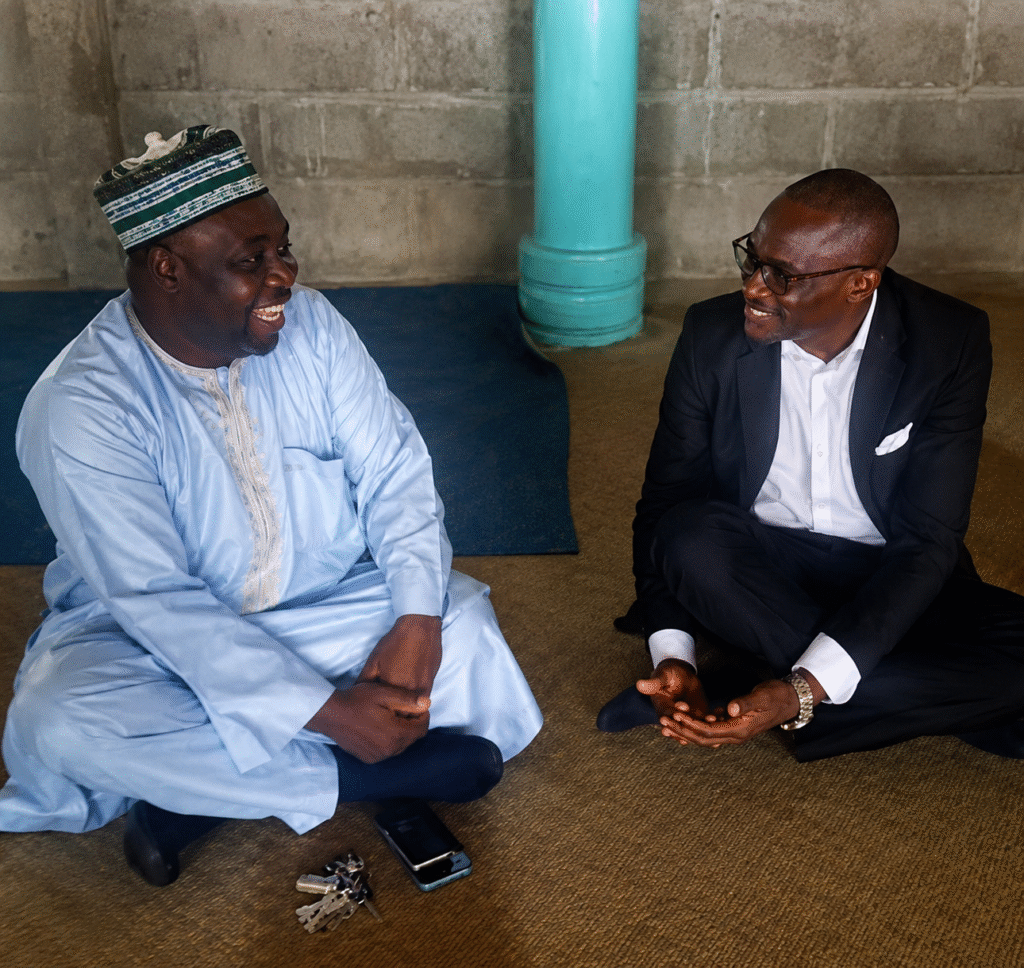
In my home country, Cameroon, religious cohabitation isn’t just a policy-it’s how we live. I often find myself in deep, joyful dialogues with my Muslim brethren. While they educate me on the five pillars of Islam, I share with them the teachings of the Lord Jesus Christ. These moments aren’t debates; they are a masterclass in mutual respect.
In reading both the Bible and the Quran, I have been struck by a powerful point of agreement: both scriptures affirm the absolute sovereignty of the Creator. They agree that the Creator takes pity on whom He wills and heals whom He wills, often irrespective of our human strivings.
This is a lesson in humility. It reminds us that while we plan, design, and implement, we must remain sensitive to the human factor. It embodies the spiritual and cultural identities that truly drive the communities we serve.
Whether we look at the Christianity of Jesus Christ, the Islam revealed by Prophet Mohammed (PBUH), the path of the Buddha or other religions, a single principle remains: “Do unto others as you would have them do unto you.”
This isn’t just a religious prescription; it is a blueprint for Institutional Ethics. For our governments and global institutions like the @African Development Bank Group, the @World Bank, and the @IMF, the lesson is clear: Stability is born from respect. When we see ourselves as children of the same Creator, the friction in trade, governance, and communication begins to dissolve.
If we can master this universal principle of reciprocity in our professional dealings, we create an environment where progress is inevitable. Whether in Yaoundé, Tehran, Tripoli, Caracas, Bangui, Darfur, Kyiv, or New Delhi, it is this shared respect that will truly bridge the gap between policy and people.